
The Fear of Entering the Room
On Tarkovsky’s Stalker and the courage to face our own desire.
Imagine a place that could grant you your deepest wish. Not the kind of goal you would write on your vision board, nor the answer you would give when someone asks about your future plans, but the wild, raw things hiding underneath all of that. Would you dare to walk in?
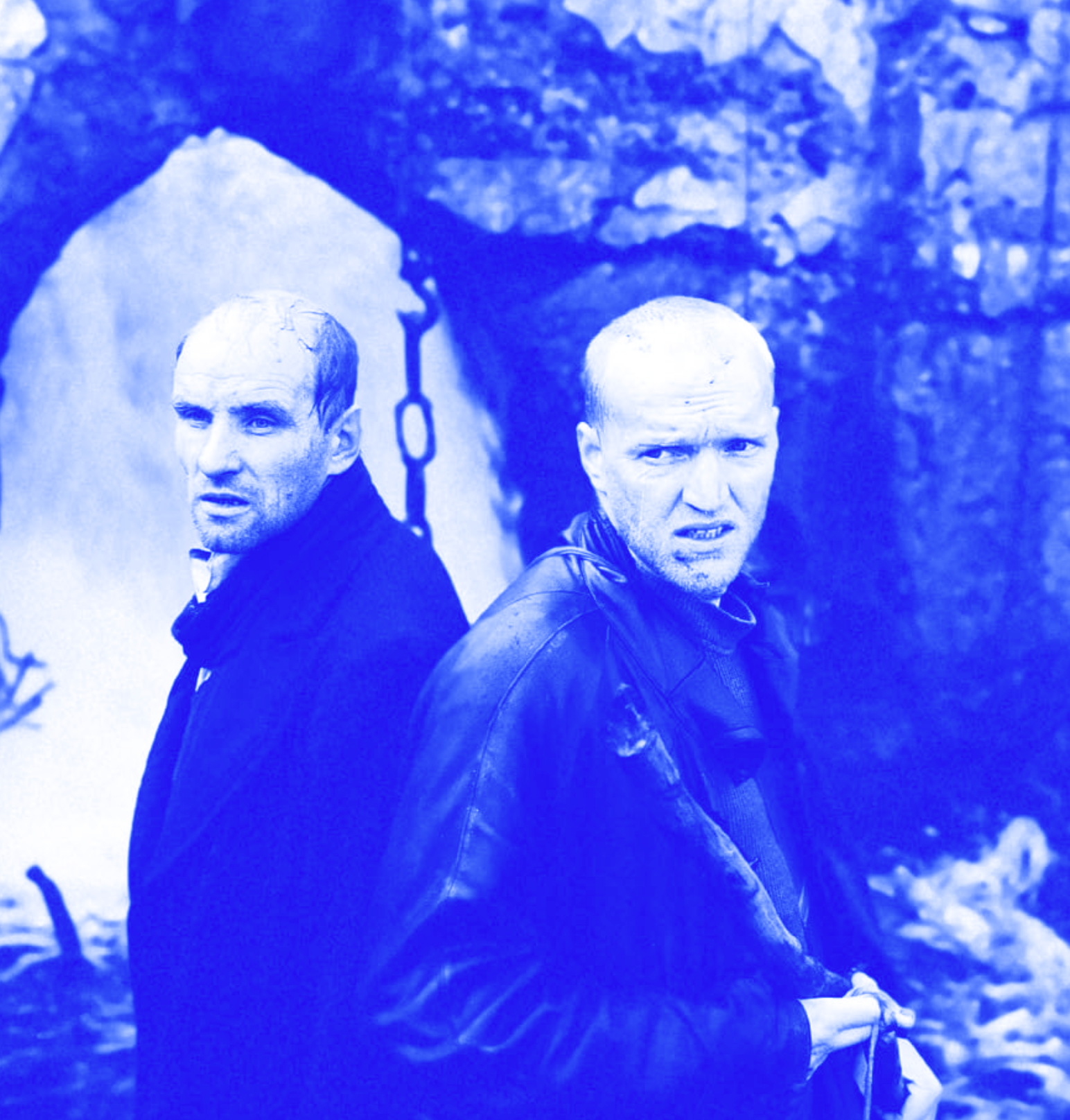
This is the question at the heart of Andrei Tarkovsky’s Stalker (1979). The movie looks like science fiction at first. A forbidden area surrounded by guards, a strange wasteland called “the Zone”. But the longer you spend inside, the more it feels like a dream about human longing. Three men make their way to the Zone: the Stalker, who leads people into the Zone almost religiously; the Writer, who is clogged and desperate for inspiration; and the Professor, who comes with a scientific intention but hides a secret. At the centre of the Zone is “the Room”. A place that fulfils your truest desire. The terrifying part is that the Room does not manifest the wish you say out loud. It gives you the one that you do not even admit to yourself.
“Tarkovsky shoots it as if nature has swallowed human ruins. Factories overgrown with weeds, dripping tunnels, water that seems endless.”
The Zone feels alive. Tarkovsky shoots it as if nature has swallowed human ruins. Factories overgrown with weeds, dripping tunnels, water that seems endless. The Stalker warns, “Here you don’t go back the way you came”. And he is right. Everyone who walks through the Zone comes out changed. But when the three men finally arrive at the Room, none of them can enter. They stop, they argue, they hesitate. What if you walked in and discovered that your deepest wish was not noble and virtuous after all, but something small, selfish, and even shameful? This is scarier than any trap the Zone could hide. As a philosophy of religion lecturer James Lorenz points out, the story is really about three forces — desire, hope, and belief. Desire pulls you forward, hope keeps you alive in the journey, and belief is what makes you dare to step forward. Without those three, you are stuck at the door of the Room.
“When Tarkovsky made Stalker, it was the late 1970s in the Soviet Union. A time when people were losing faith in big promises. The future felt empty. The Zone mirrors that despair but also hints at renewal. This is why it does not feel like just Soviet history but something uncomfortably close to us.”
When Tarkovsky made Stalker, it was the late 1970s in the Soviet Union. A time when people were losing faith in big promises. The future felt empty. The Zone mirrors that despair but also hints at renewal. This is why it does not feel like just Soviet history but something uncomfortably close to us. It reminds me of how often we talk about our dreams but secretly wonder if we even know what they are. What is “our Zone” today? For some, it might be success, or love or just a hope for stability. For others, it is inspiration, escape and freedom. Maybe the point is that everyone has one, and the real fear is what will happen if we stand at the threshold and realise we do not have the courage to face it.
“Stalker is not an easy film. It is long, slow, sometimes frustrating. But it lingers like a dream you cannot shake.”
And yet the film does not leave us in nothingness. After all the gloom and arguments, Tarkovsky ends not in the Room but on something more gentle. The Stalker’s wife, who has suffered because of him, is still standing by him with a kind of devotion. Tarkovsky later wrote that the true element of life is love in his reflection. Not grand achievements, not abstract belief, but love that stays, even when it hurts. After almost three hours of grey landscapes, this idea feels like a miracle. Maybe this is “the Room” we are all searching for without knowing it. Stalker is not an easy film. It is long, slow, sometimes frustrating. But it lingers like a dream you cannot shake. It leaves you with questions that feel impossible to settle. Perhaps the real Room is not a place at all, but the confrontation with our own capacity for meaning. To stand before the unknown and still choose to believe.
Background Note
Stalker was made in the late 1970s in the Soviet Union, at a time when people were losing faith in the future and big promises fell into a void. Tarkovsky filmed much of it in abandoned industrial sites in Estonia, places so polluted that many believe the toxic air later made him and others from the crew sick. The story itself came from a sci-fi novel called Roadside Picnic, but Tarkovsky took out the aliens and technological elements to leave behind something slower, stranger, and far more metaphysical. That is why the Zone does not feel like ordinary science fiction at all. It feels like a mirror — not just of Soviet despair, but of our own inner world. Unsettling, fragile, but still holding onto the possibility of hope.

Author: Hailey Tai
“Hailey’s Comet” is where I write about what moves us. The art, books, and ideas that orbit our daily lives. From Tarkovsky’s films to banned books, and the logic of colour to questions of belief, each piece follows a spark of curiosity and lets it unfold into something humanly shared. It is a space to slow down and look closer. And to notice what usually slips past and the small things that end up meaning everything. Like a comet, each story passes through for a moment but leaves a trace of light behind.